## A.L. Rees (2007). *Frames and Windows: Visual Space in Abstract Cinema*. : Rodopi.
> [!INFO]
> Type:: [[]]
> Title:: Frames and Windows: Visual Space in Abstract Cinema
> Author(s): [[A.L. Rees]]
> Year:: 2007
> Tags::
> DOI::
> Citekey:: rees_frames_2007
> ZoteroURI:: [Open in Zotero: Frames and Windows: Visual Space in Abstract Cinema](zotero://select/items/@rees_frames_2007)
> ReviewedDate:: [[2024-01-15]]
## Citation
```latex
[@rees_frames_2007]
```
## Related
```dataview
TABLE file.aliases AS "Title" FROM [[@rees_frames_2007]] and -"Plans" and -"resources"
```
## Summary
-
## Annotation
Abstract
- [[1920c experimental films]] 1921-4년 사이에 있었던 형태 위주의 여러가지 예술적 시도들이 행해졌다. 시각적 음감적 으로 나뉘어 있던 이러한 방식은 주로 [[Viking Eggeling]]이 소리에 집중하고 [[Hans Richter]]와 [[Walther Ruttmann]]이 형태 (painterly)에 집중했다.
- figurative with abstract imaging
- 이 글의 설명에 따르면 이 시기 [[form-language]]를 사용했던 여러 작가들은 [[Montage]] 를 사용했고 특히 몽타주에서 리듬 몽타주의 빠른 [[cut-up]] 효과를 사용했다.
## Highlights
- 과거와 현재 [[Dadaists]] 와 실리콘 벨리
- 현재 쓰이고 있는 ‘윈도우’ 의 유저의 작동은 [[Hans Richter]] [[Walther Ruttmann]] 의 작업에서도 똑같은 [[form-language]]를 찾을 수 있다. 이러한 형태는 대략 1921년과 25년 사이에 만들어졌다.
- [[@manovich_language_2001]], 306)
- > “One general effect of the digital revolution is that [[avant-garde]] aesthetic strategies came to be embedded in the commands and interface metaphors of computer software. In short, the [[avant-garde]] became materialized in a computer”.
- This is expanded in his essay [[@manovich_language_2001]], [The Avant-garde as Software](www.uoc.edu/artnodes/eng/art/manovich1002/manovich1002.html)
- [[Article/Maureen Turim, 1999, “Artisanal Prefigurations of the Digital: Animating Realities, Collage Effects and Theories of Image Manipulation”]]
- 이러한 베를린의 [[Dadaists]] 들 (Cavaret Voltaire) and Weimar Germany과 실리콘 벨리의 히피들의 만남은 우연일까?
- [Dada]([[Dadaists]]) 와 급 구성주의 [[Constructivism]] 은 1930년도에 죽지 않았다. 네오 다다와 [[Fluxus]] 아트의 1960년도가 그 중간에 있고 그 후에 컨템의 비디오 아티스트들이 있다.
- 가장 뚜렷한 주장은 ‘intervention’ 혹은 ‘interruption’ 전략의 [[Film/David Hall, WithouTV (1992)]] 가 있다.
- 티비가 사라지고 다른 티비가 그것을 replace하면서 다시 프레임화된다. 그리고 그것은 반복된다. 그리고 마지막 장면은 실재 텔레비전이 마지막 프레임과 공존하게된다.
- 과거
- 가장 최초의 발걸음은 1920 년대의 [[Hans Richter]] 와 [[Walther Ruttmann]] 그리고 필름을 통한 abstract art의 실험은 1912년 [[henri Survage]] 그리고 비슷한 시도가 2년전 이탈리아 [[Futurists]]에 의해 시도되었다.
- 이러한 시도들의 특징은 [[ur-cinema]], 여러가지 표면의 변화와 이동. 심볼리즘에 가까운 여러 형태들, 원, 별, 나선 등등.
- 그리고 한스와 월써가 다른것은 그저 그리기 도구가 아닌 실제로 찍고 projected abstract films 를 만들었다는 점이다.
- [[Hans Richter]] 의 40년대 필름은 실험들의 편찬이었다. [[Viking Eggeling]]의 스크롤-드로잉을 모았던고
- (57)
- > A point to underline here is that one crucial stage in the invention of abstract cinema emerged from a Far-Eastern model of art – the scroll – and not from the bounded frame, which characterized mainstream Western art. There is also a crude analogy between the scroll unwinding in front of the viewer and the film moving from one reel to the other.
- [[Artwork/Hans Richter, Rhythm 23 (1923)]]
- [[Werner Graeff]]의 증언에 의하면 [[Hans Richter]]는 [[aspect ratio]] 에 대해 씨름하고 있었다. [(Film As Film 1979: 80)]([[Book/Film as film: Formal experiment in film, 1910-1975 : Hayward Gallery South Bank]])
- 필름은 그당시 충격 효과, 그를 통한 시각적 무의식의 공격이었다.
- [[Sergei Eisenstein]] [[montage of attraction]]
- [[Walter Benjamin]]’s [[dynamite at a tenth of a second]]
- 하지만 이건 [[Viking Eggeling]]이라면 취하지 않았을 길이다. 그에게는 필름은 생산 미디엄이었다. 즉 필름 자체가 골은 아니었다. 목표는 움직임의 표현과 시간에 따른 음색 변화 였다.
- {{[[video]]: https://youtu.be/MtBjFv46XLQ}}
- 환상적 깊이에 대한 작업은 [[Walther Ruttmann]]의 작업에서도 살펴볼 수 있다. [[form-language]]
- Opus 1
- <iframe title="Lichtspiel Opus I (1921) - Walther Ruttmann" src="https://www.youtube.com/embed/aHZdDmYFZN0?feature=oembed" height="150" width="200" allowfullscreen="" allow="fullscreen" style="aspect-ratio: 1.33333 / 1; width: 100%; height: 100%;"></iframe>
- 그의 작업에서 가장 특징적인 것은 리듬이다. 이것은 현재의 디지털 스트리밍을 생각나게 나는 효과이다. 또한 [[Hans Richter]]처럼 프레임의 테두리를 현재는 불안정화된 스크린의 중심처럼 취급한다.
- #Comments 이게 무슨 의미지? 현재 스크린의 중심은 어떻게 불안정화된거지?
- 하지만 그가 다큐멘터리를 제작할 때는 압스트렉 시네마를 완전히 버렸다. [[Film/Hans Richter, Berlin: Die Sinfonie der Großstadt in 1927]]
- 그리고 이 이후로 사진적 추상적 이미지를 편집하기 시작했다. 그를 통해 그는 새로운 몽타주 폼을 만들었고 [[Film/Inlfation (1928)]]와 같은 푸로모 비디오의 시작이 되었다.
- > I mean that by taking the whole movie screen, pressing it together and opening it up, top, bottom, sides, right, left, you don’t perceive form any more, you perceive movement. [...] The definition of form refers to one’s perception of the formal quality of a single object, or several single objects; but when you repeat this same form over and over again and in different positions, then the relationship between the positions becomes the thing to be perceived, not the single or individual form. One doesn’t see the form or object any more but rather the relationship. In this way, you see a kind of rhythm. (Richter, 1971: 132 and Le Grice 1976: 26)
- 70년대 이후
- 이 처럼 순수한 형태보다 리듬과 반복을 추구한 것은 [[George Barber]] 의 [[Film/George Barber, Scratch Free state (1983)]]
- 스크린을 가득 채우는 날라다니는 video-mix로는 [[Mick Harney]] 의 [[Film/Mick Hartney, Orange Free State (1978)]]
- 그리고 다시 10여년 후 [[Nikolas Tzaferidis]]의 [[Film/Nikolas Tzaferidis, machine-ing (1996-7)]]
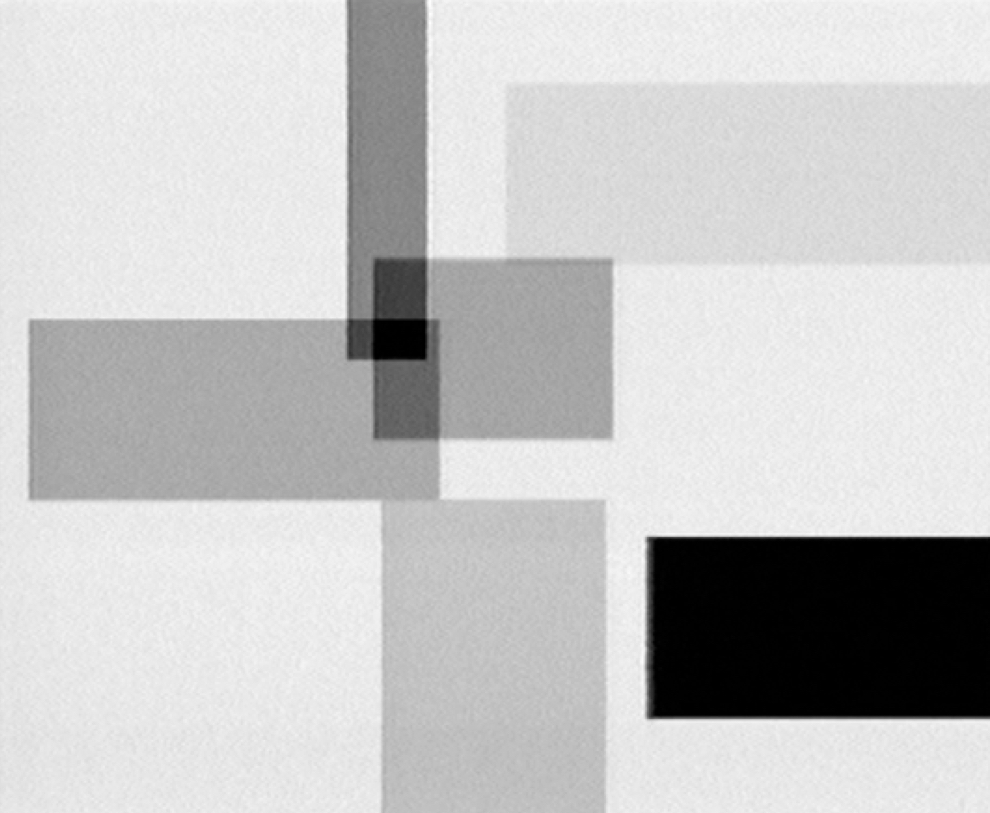
- 마지막 예시는 [[Steve Littman]]의 [[Film/Steve Littman, Digital Boogie-Woogie (1997)]]
- 
- 커머셜 링크의 추상 비디오
- [[Whitney brothers]], [[Charles Dockham]], [[Mary Ellen Bute]]
- 이론가 그리고 시인
- [[Malcolm Le Grice]]와 [[Len Lye]]의 경우 필름 위에 페인팅으로 이어감
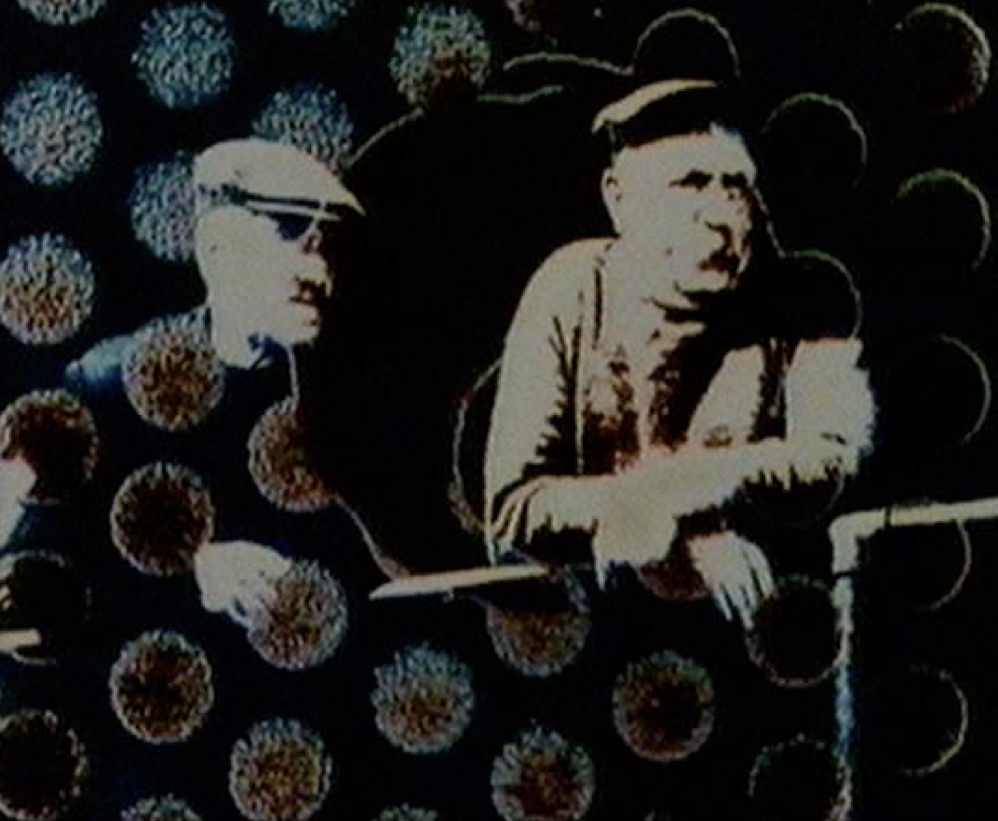
- [[Film/Len Lye, Trade Tattoo (1937)]]
- 
- 그의 경우 이론가라기 보다 시인이었다.
- [[Paul Sharits]], [[Neo-Dada Fluxus]] 의 멤버였던 그는 언어의 힘에 도전했다.
- [[Film/Paul Sharits, Word Movie (1966)]]
- <iframe title="Paul Sharits - Word Movie(1966)" src="https://www.youtube.com/embed/U7gExqNaAMo?feature=oembed" height="150" width="200" allowfullscreen="" allow="fullscreen" style="aspect-ratio: 1.33333 / 1; width: 100%; height: 100%;"></iframe>
- 컬러, 멀티컬러
- [[Film/Pfaffenbichler, Lotte Schreiber, Notes on Colour (2003)]]
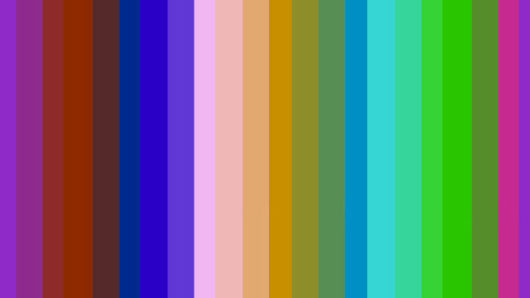
- [[Film/Simon Payne, Colour Bars (2004)]]
- 
- [[Film/Dariusz Krzeczek, Stefan Nemeth and Rainer Mandel, Pixel (2003)]]
- 도시의 생활과 추상 시그널
- [[Film/Annja Krautgasser, Frame (2002)]]
- <iframe src="https://vimeo.com/242040339" allow="fullscreen" allowfullscreen="" style="height:100%;width:100%; aspect-ratio: 16 / 9; "></iframe>
- [[Film/Maia Gusbert, airE (2001)]]
- [[Film/HC Gilje, Crossings (2002)]]
- [[Film/Michaela Grill, trans (2003)]]
- [site](https://migrill.klingt.org/trans)
- 이러한 작업들에 대해 [[Stefan Grissemann]]
- > [...] the movement does not take place within the images themselves, but between them [...] a work of reciprocal merging and overlapping [...] its main place of action is the space between two images, and its defining order is the neither-nor of two positions imagined as one. [(Abstraction Now 2004: 236)]([[Book/Norbert Pfaffenbichler and Sandro Droschi, 2004, Abstraction Now]])
- [[Film/Toby Cornish, Sarajevo Vertical (2004)]]
- <iframe title="Sarajevo Vertical (2004)" height="240" width="320" src="https://player.vimeo.com/video/99402368?app_id=122963" allowfullscreen="" allow="fullscreen" style="aspect-ratio: 1.33333 / 1; width: 100%; height: 100%;"></iframe>
### Related
```dataview
LIST FROM [[@rees_frames_2007]] and -"Plans" and -"resources"
```